
The Origin of Radio
By Courtney Krus
Radio has always been a part of my life, even in the smallest ways.
I remember AM radio playing in my grandparents’ kitchen. Good old country music coming through the speakers of a tractor on the farm. Calling into a local radio station growing up just to hear my name on the air. (You can’t tell me you didn’t do that too! 😆)
In college, it was Delilah on those late-night drives back to campus after visiting family, often with tears streaming down my face.
Radio shaped more than my memories. It shaped my career. My first job out of college was in radio, and I even got my start in fundraising because of it.
And yes, I even married a “radio guy”!
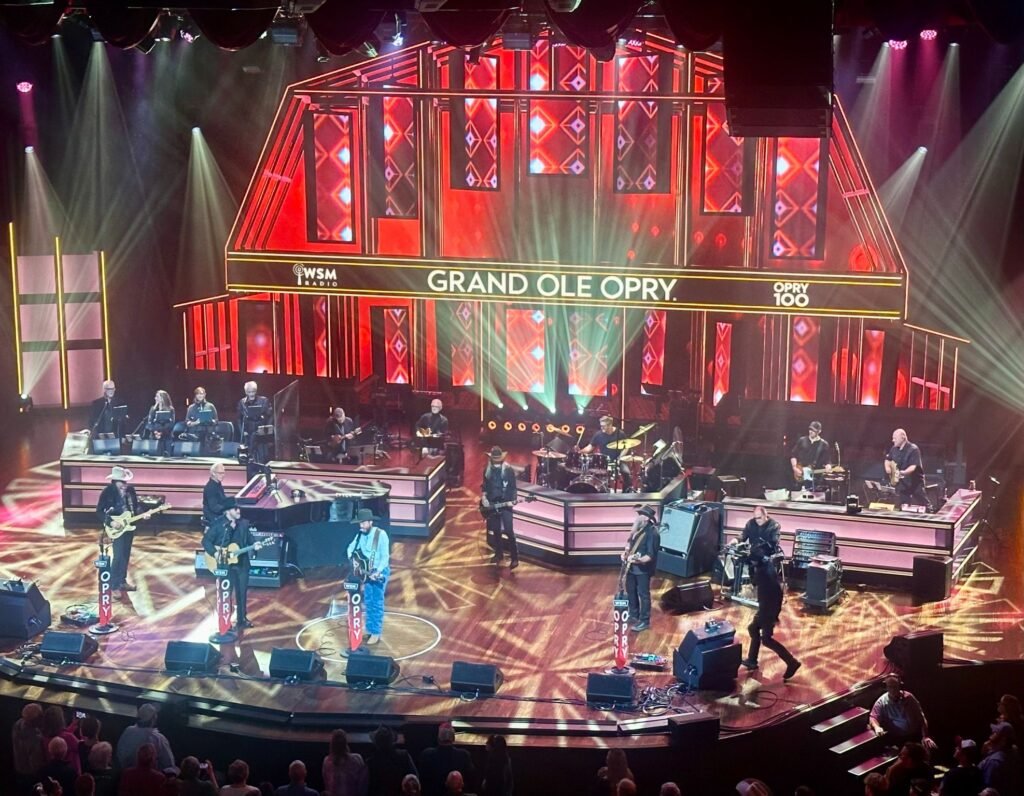
So being in Nashville last week and attending the Grand Ole Opry for the first time, watching it air live on WSM-AM, felt like a full-circle moment.
For nearly 100 years, the Opry has been broadcast on WSM, which stands for “We Shield Millions,” the corporate motto of the National Life and Accident Insurance Company that founded the station in 1925.
Yes! An insurance company launched the station and the Opry to promote its services. 🤯
That sent us down a rabbit trail.
When we got home, we watched a PBS documentary on the history of Country music (so good, btw!). It also highlights the start of the radio industry. Radio stations weren’t created simply to entertain, but instead they were built to grow businesses. WSM followed the lead of stations like WLS in Chicago, which had already proven the model.
Music was layered into what was essentially a never-ending infomercial, sometimes just an hour to draw people in.
It worked!
The content earned the attention, and the business message rode on the back of it.
Experiencing the Opry and watching the documentary, I was struck by how relevant this story still feels for fundraising today.
The origin of radio mirrors most of the channels we use in fundraising. They capture attention by delivering something people value, and once the audience is engaged, the revenue follows.
That order matters.
But as fundraisers, we often reverse it.
We reduce channels to their most transactional form — the appeal letter, the email ask, the digital campaign — and forget about what actually builds the right to ask in the first place.
The Opry didn’t succeed because it interrupted people with a pitch. It succeeded because it built loyalty, habit, and community. People tuned in because they wanted to. The sponsorship message worked because attention and trust had already been earned.
This is an important reminder.
🎙️ Radio and broadcast aren’t just megaphones for your ask.
📝 Direct mail isn’t just an appeal.
📧 Email isn’t just a link to a donation page.
👩💻 Digital isn’t just acquisition.
They’re platforms to build connection and trust at scale.
The channels have evolved, and they will continue to evolve. But the needs of humans, and the way we respond to familiarity, emotion, and consistency, haven’t changed nearly as much as we think.

Courtney Krus
Managing Partner
Never Miss a Post!
We hope to post good and valuable content like this, without overwhelming your inbox once or twice per week. Want to be notified when a new post goes up? Complete the form below and we’ll make sure you get an email notifying you of new articles being published before anyone else gets notified.